About Me
Welcome to my personal webpage
My research focuses on unraveling the physical and chemical mechanisms governing star and planet formation. To probe these dense and dynamic environments, I utilize multi-wavelength observations—spanning optical, infrared, and sub-millimeter regimes—from leading international space missions and ground-based facilities.
My primary research centers on protostellar jets, early accretion dynamics, and planet detection around young stars. High-resolution submillimeter data from ALMA allow me to resolve cold gas kinematics and disk structures at fine scales, while infrared imaging and spectroscopy from JWST pierce dense protostellar envelopes to trace shock-excited jet launching regions, organic chemistry, and forming giant planets.
A central pillar of my research strategy relies on leveraging Indian national optical and infrared telescope facilities to drive long-term spectroscopic monitoring and high-precision stellar diagnostics.
I actively utilize the 3.6-m Devasthal Optical Telescope (DOT) for deep optical and near-infrared spectroscopic characterization of young stellar objects, alongside the Himalayan Chandra Telescope (HCT) for monitoring outflow variability and stellar accretion dynamics.
Furthermore, I am heavily interested in high-resolution time-domain optical spectroscopy using PARAS-2 on the 2.5-m Mount Abu Telescope, measuring precision radial velocities, accretion rates, and line-profile asymmetries to constrain magnetospheric accretion, stellar winds, and early planet-forming environments.

Education and Background:
2023 - 2026: Support Scientist at Academia Sinica Institute of Astronomy and Astrophysics (ASIAA), Taiwan
2019 - 2023: Post Doc at Academia Sinica Institute of Astronomy and Astrophysics (ASIAA), Taiwan
2018 - 2019: Post Doc at Indian Institute of Science Education and Research (IISER), Tirupati, India
2012 - 2017: Ph.D. at S N Bose National Centre for Basic Sciences, India
Ph.D. Thesis: Multi-wavelength studies on Galactic H II regions
Research Interests:
The birth of young stellar system: outflow, jet, planet
Multiwavelenth (submillimeter, infrared, optical) study of star-forming regions
Observations of interferometer and single-dish telescopes
Radio instrument installation, calibration and data processing
Publications: ADS link!
Telescope Proposals: link!
Language and Skills:
Computer Language: python, C
Language: English (fluent); Hindi/Sanskrit; Bengali(first language)
software: CASA, CARTA, IRAF, TOPCAT, DS9
Developed Tutotrials:
Basics on Python Coding (Python, Numpy),
Basics on AI/ML
Contact:
Email: duttasomnath9@gmail.com
Address: ASIAA,Taipei 106216, Taiwan, R.O.C.
Research

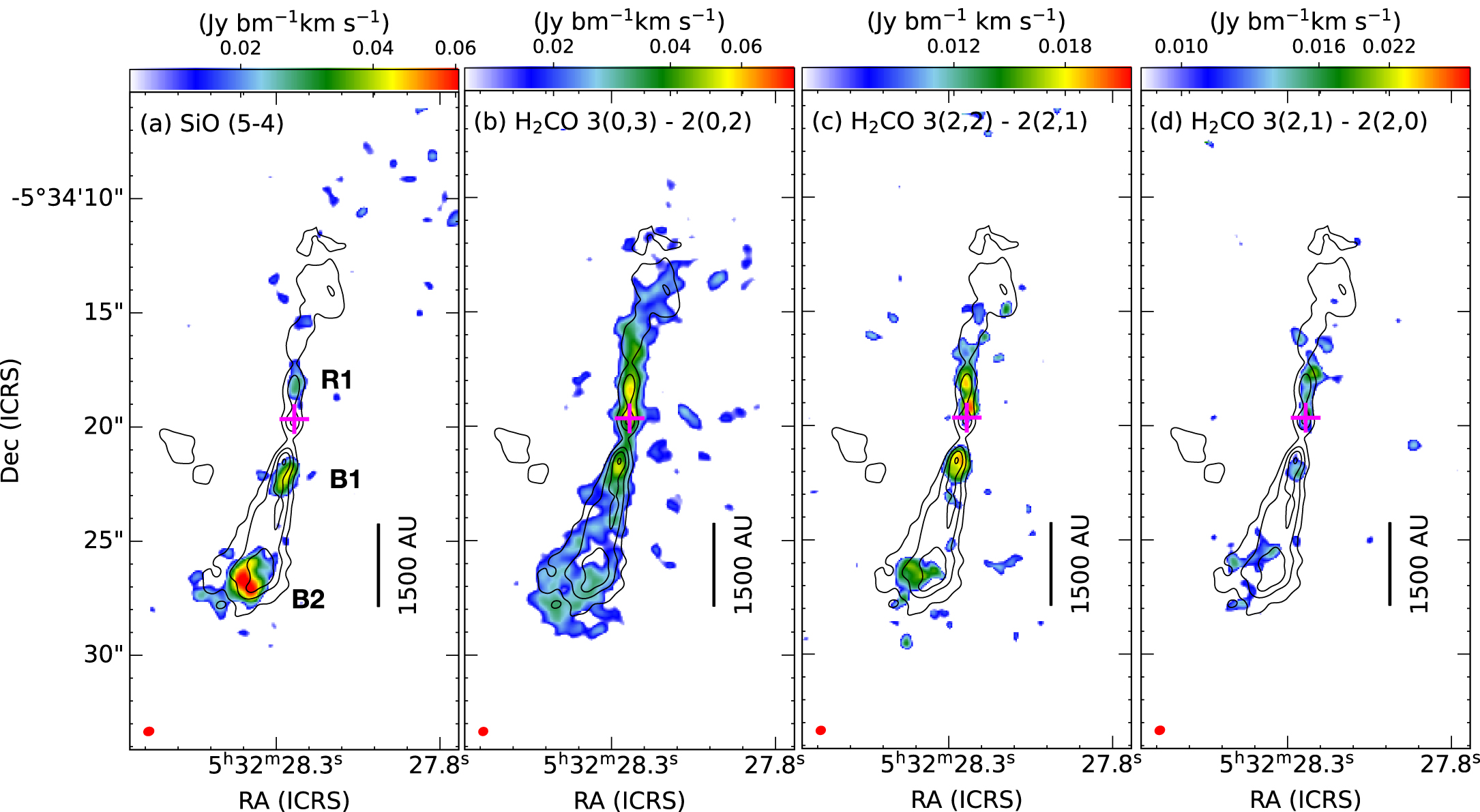
Project I: The jet and outflow system was analyzed by combining high-resolution mid-infrared H2
line observations from JWST/MIRI with ALMA submillimeter CO and SiO data. Using a newly developed spectral analysis pipeline
called peakmoment (https://zenodo.org/records/16623946), fine-scale shock knot
structures were resolved, revealing distinct spatial offsets and shock layering along the jet axis. High mid-infrared extinction
hides the redshifted lobe in JWST observations, giving it a unipolar appearance, whereas ALMA detects the full bipolar structure.
Rotational diagram modeling identifies distinct warm and hot thermal gas layers that trace the collimated inner jet, shock fronts,
and wider outflow cavities
(see the full paper: Dutta S., 2025, ApJ, 991, 45.
Molecular Jets from an Evolved Protostar: Insights from JWST-ALMA Synergy (https://doi.org/10.3847/1538-4357/adf8d6)).
Project II: Protostellar Jets/Outflows and Planet Formation
Outflows and jets are the most intriguing characteristics of
protostars during the accretion process.
They remove excess angular momentum from the disk surface, allowing accreting material to fall onto the star surface.
The origin and characteristics are still unclear. High-resolution and high-sensitivity observations with
Atacama Large Millimeter Array - ALMA in the submillimeter
wavelength provides a robust opportunity to explore the characteristics of the jets. Observations of statistically significant
jets allow drawing a comprehensive picture of the jet's characteristics. A few AU scale observations with higher velocity resolution
allow to measure jet rotation as well as jet-launching radius (ref: ALMASOP project;
Dutta et al. 2020;
2022a;
2022b
&
2024
)
Planets are thought to form within protoplanetary disks at their very early evolutionary stage.
Observations and simulations have indicated possible signs of planet formation within these disks.
However, the exact process and timeline for the beginning of their formation are not yet fully understood,
and further detailed investigation is needed.
We are working on the emission from the dust continuum and molecular line within the disk,
and model the structures to identify potential substructures associated with planet formation.
|
Dense Cores, Molecular Outflow and Jets, the Birth Places of Stars and Planets
|
|
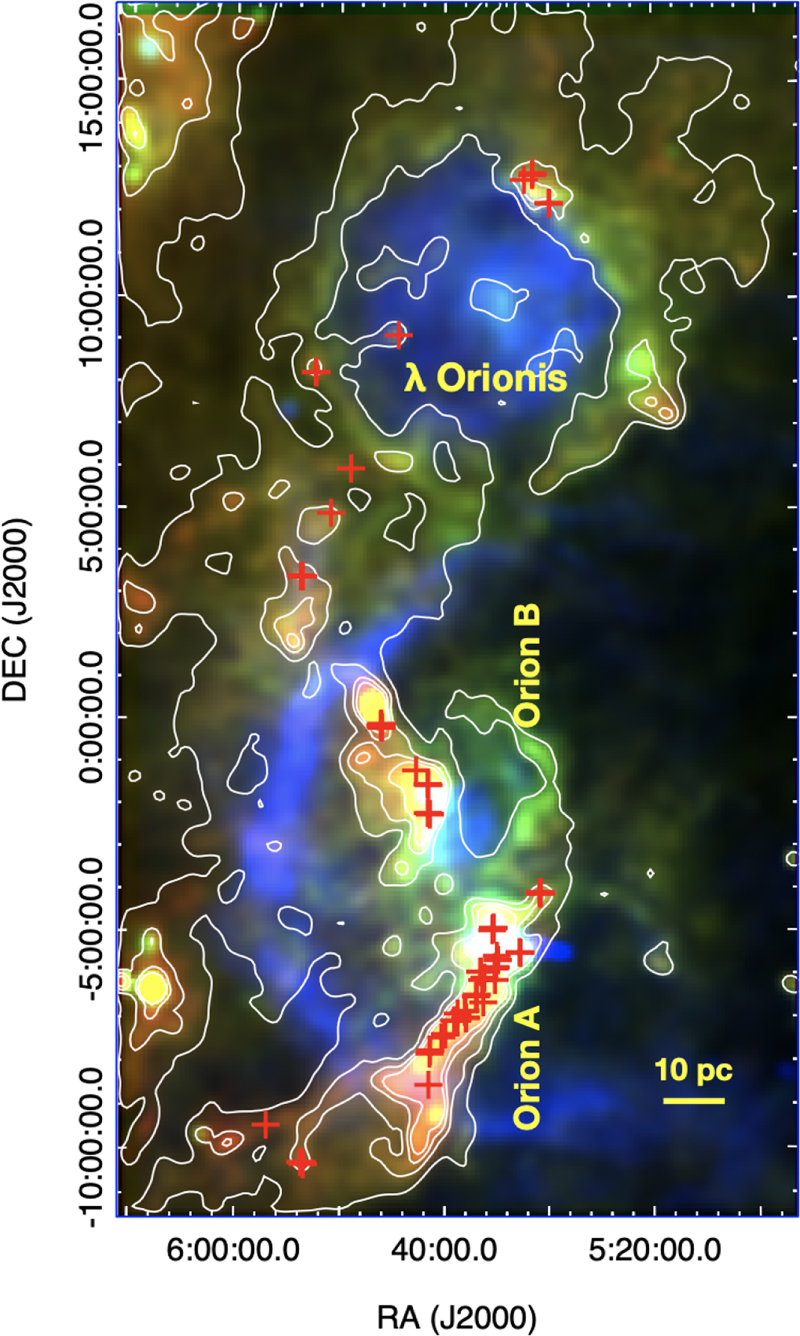
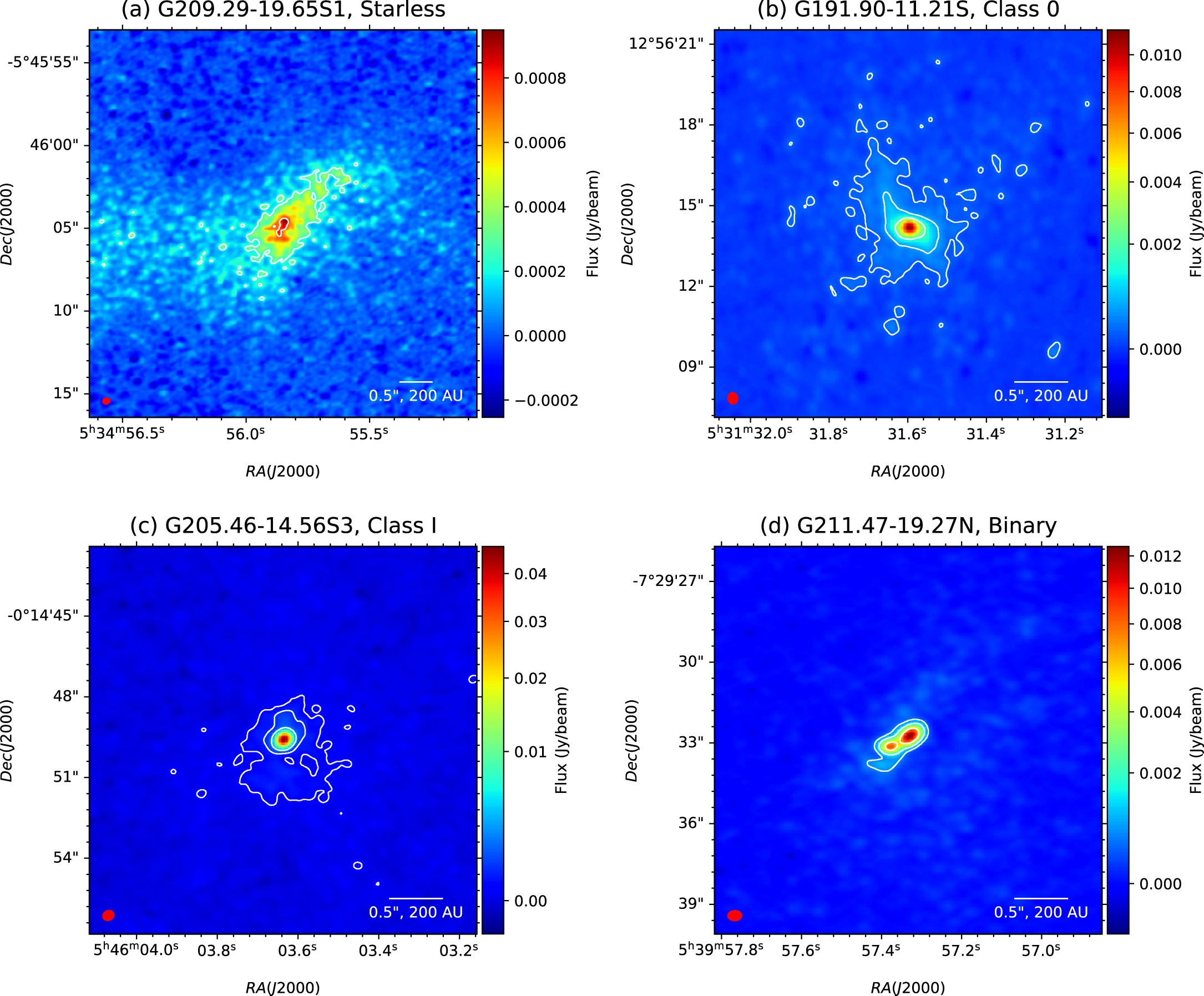
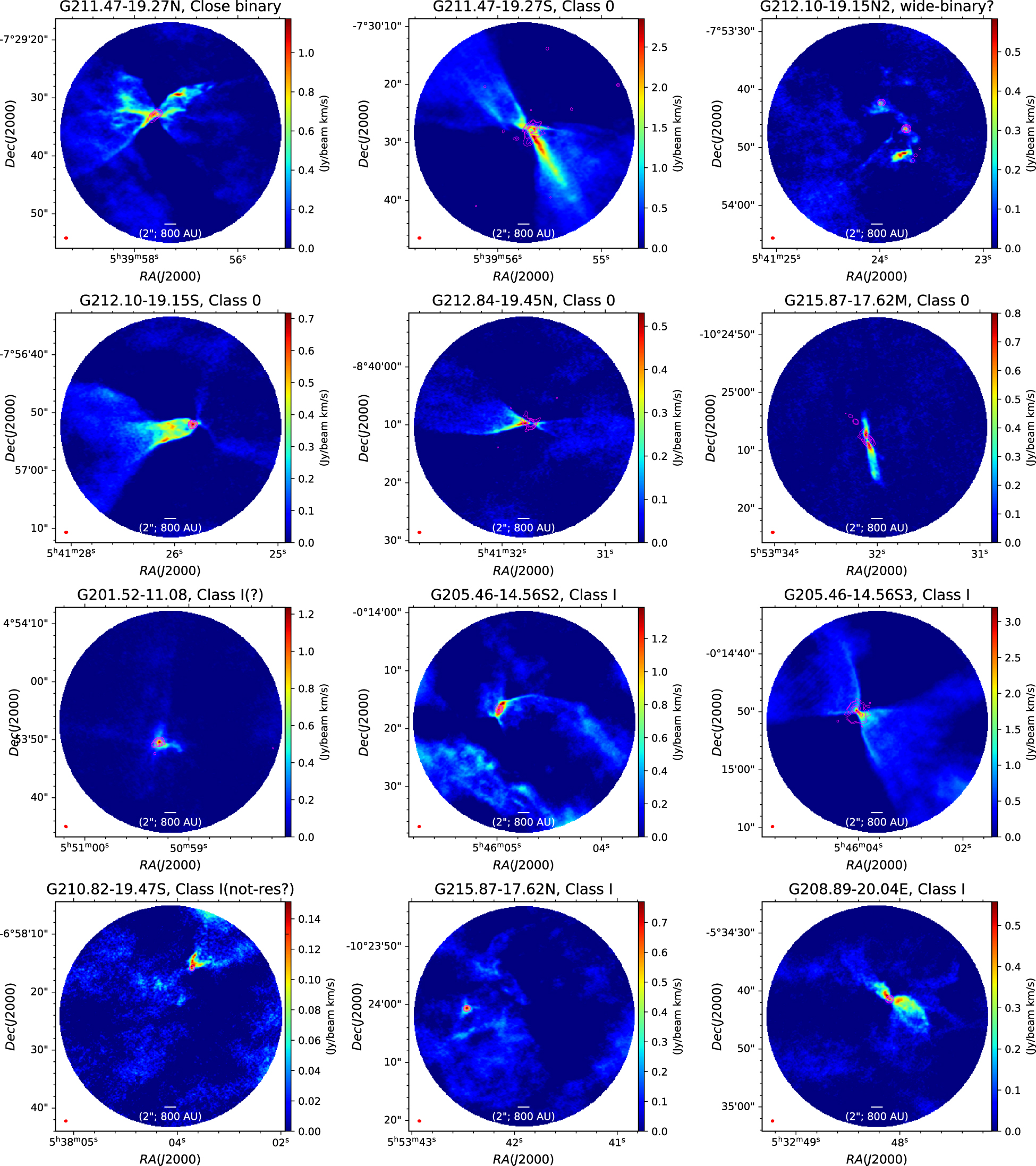
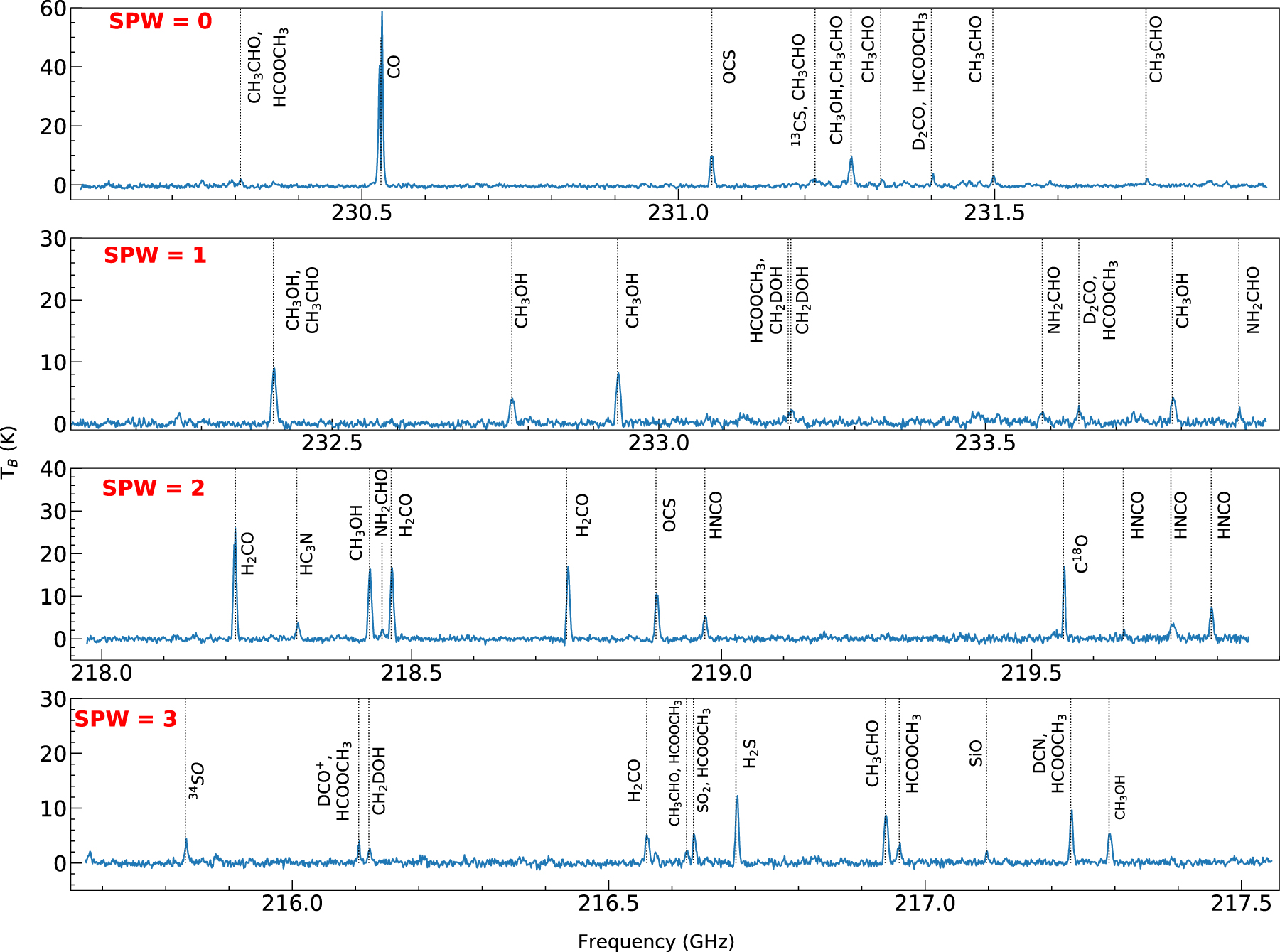
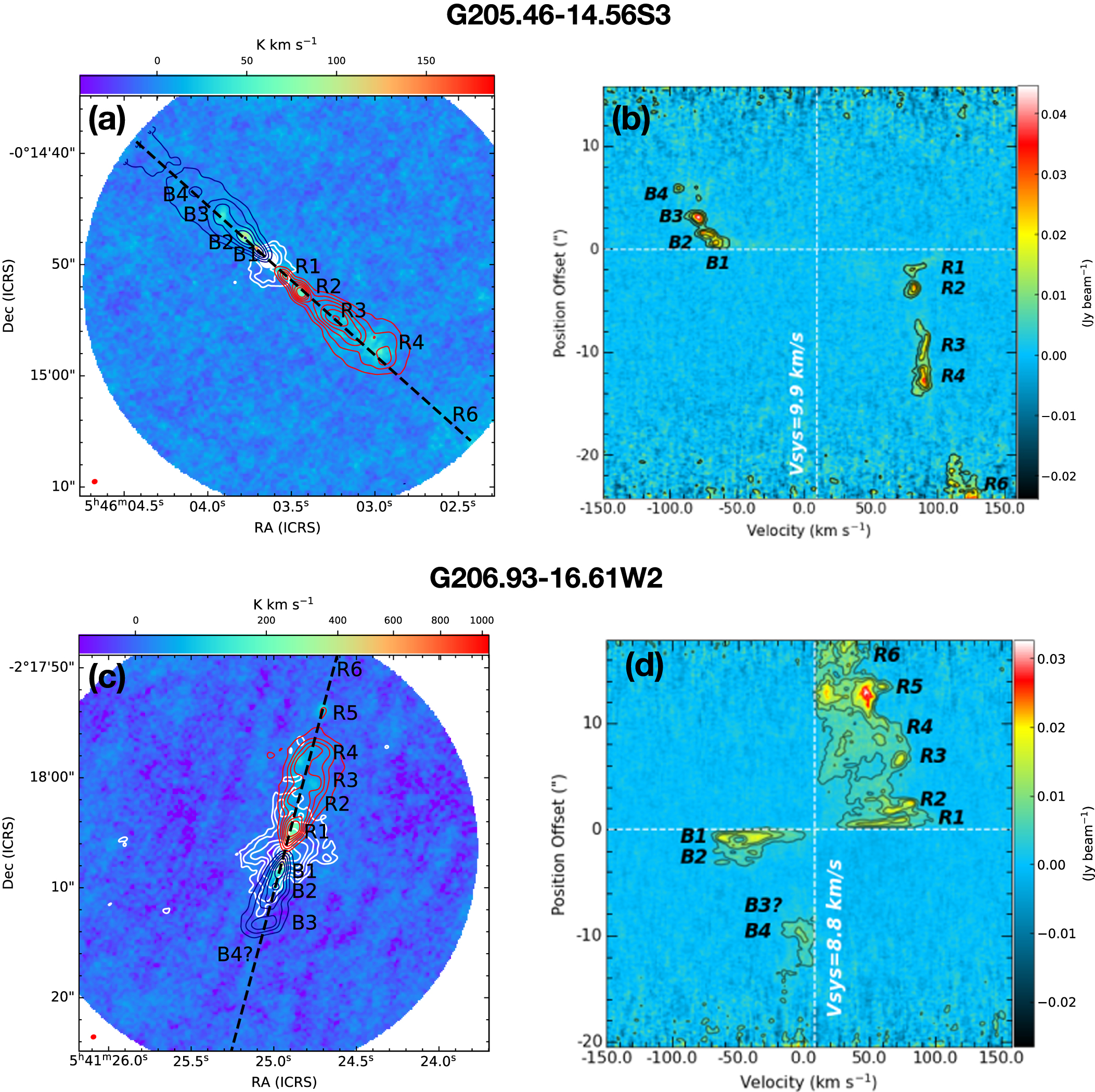
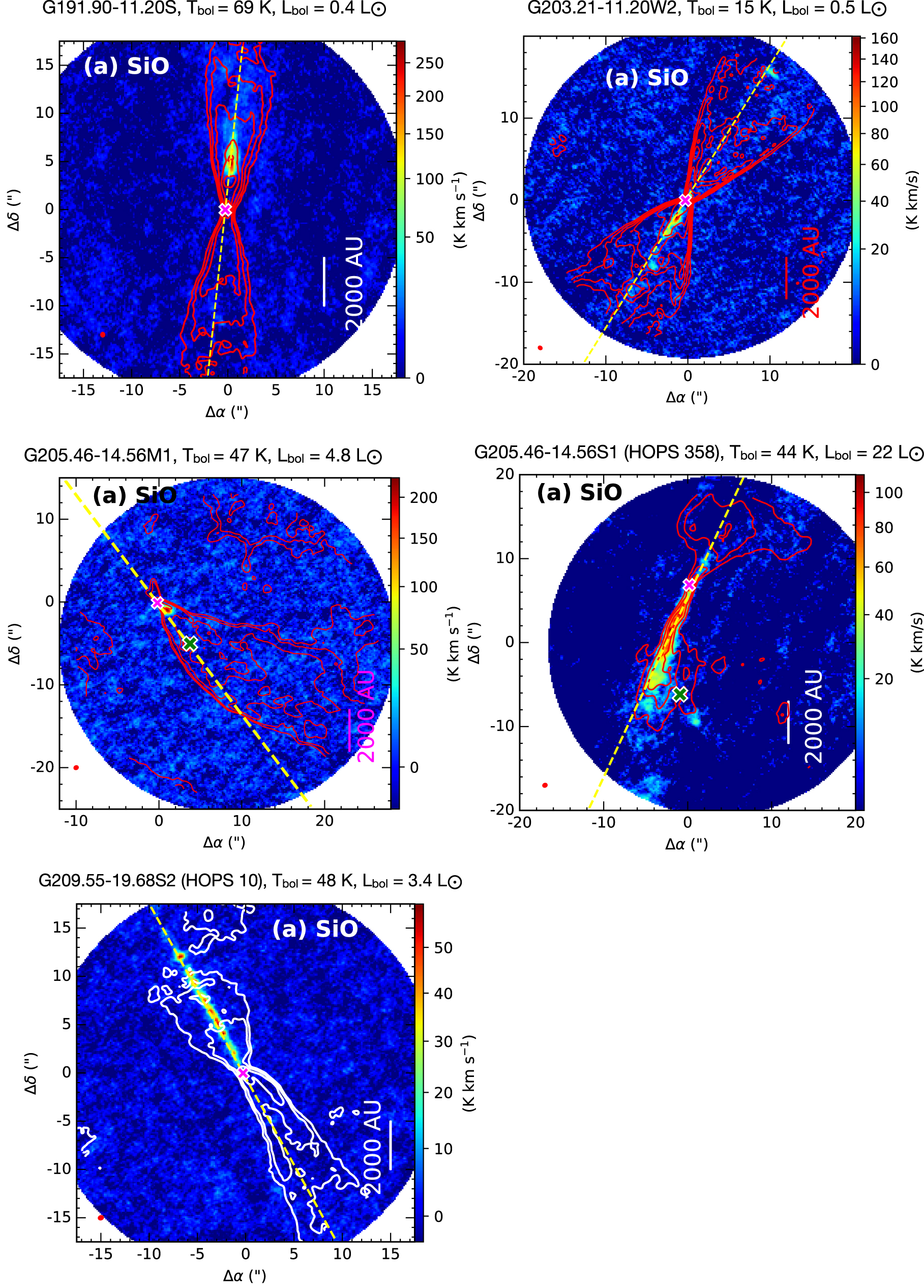
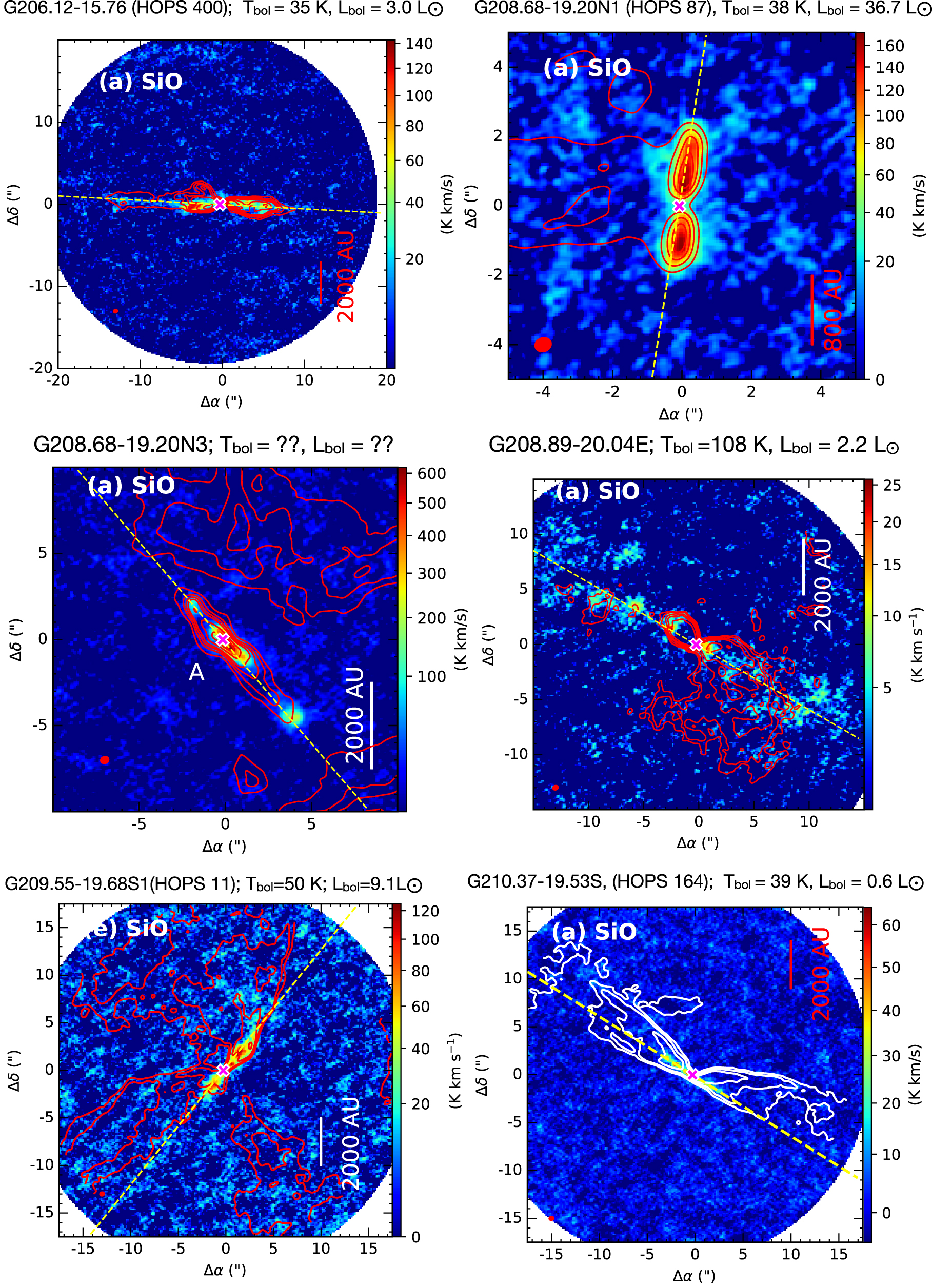
Dense cores are incredible targets for investigating the initial condition of star formation, jet morphology, chemical evolution, and planet formation. To explore multiple goals, we have been investigating a set of dense cores. Slide (1) displays the location of such dense cores in the Orion molecular Cloud Complex. Slide (2) presents examples of continuum emission of different kinds of dense cores. Slide (3) shows examples of outflow emission of already formed protostars within dense cores. Slide (4) shows the chemical composition of Hot corinos within dense cores. Slide (5) displays molecular jets and associated knots for two stars, one of them is the most evolved protostar with a molecular jet. Slide (6) is one of the youngest molecular jets. Molecular jets could be monopolar or bipolar. Slide (7) provides some examples of monopolar jets. Slide (8) shows some examples of bipolar jets.
|
|
|
Copyright©
Dutta et al. 2020
;
Dutta et al. 2022a
;
Dutta et al. 2022b
&
Dutta et al. 2024
|
Project III: Formation of Young Star Cluster
The formation of the star cluster is a topic of considerable interest since most stars in our Galaxy form in groups within clustered environments.
Several environmental conditions can breed young clusters. As molecular clouds are often composed of HIIregions, bubbles, and dense filamentary structures
, understanding what shapes the molecular clouds to be dense and massive enough to form a young cluster is therefore of great interest.
Additionally, the initial cloud configuration decides the future location of cluster formation.
Therefore, the exact role of environment on the star and star cluster formation of a cloud can only be thoroughly understood by tracing various components of the interstellar medium
(ISM) through multiwavelength observations. We utilize multiwavelength (sub-millimeter, radio 1.4 GHz, infrared, optical) observed data to explore the star and star cluster formation
(Ref:
(Dutta et al. 2015,
2018b
)
|
Molecular clouds: Formation of Massive Stars, HII regions, Star Cluster Formation
|
|
Slide (1) displays an example of star cluster 2282.
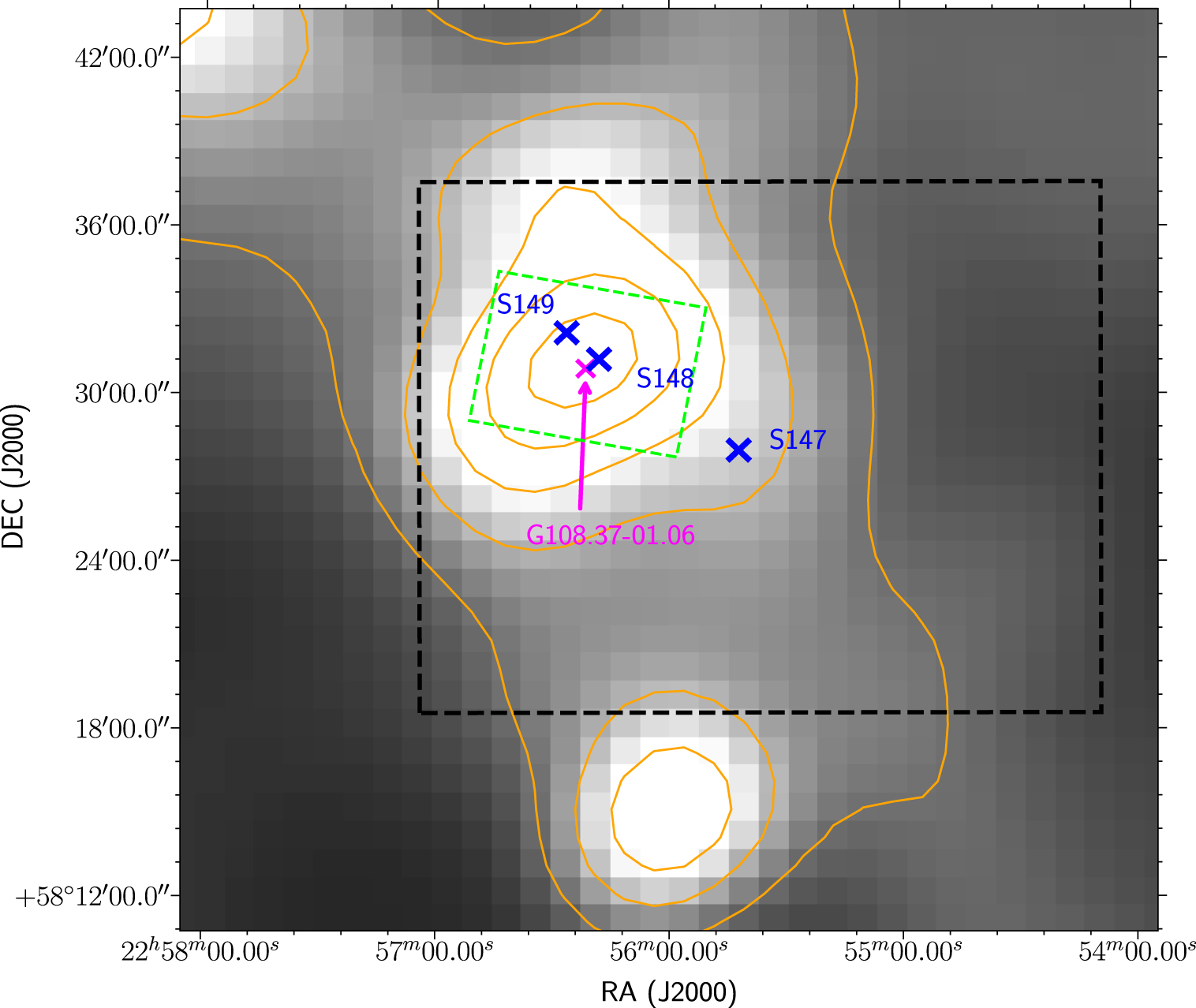
Slide (2) presents example of star forming molecular cloud G108.37-01.06.
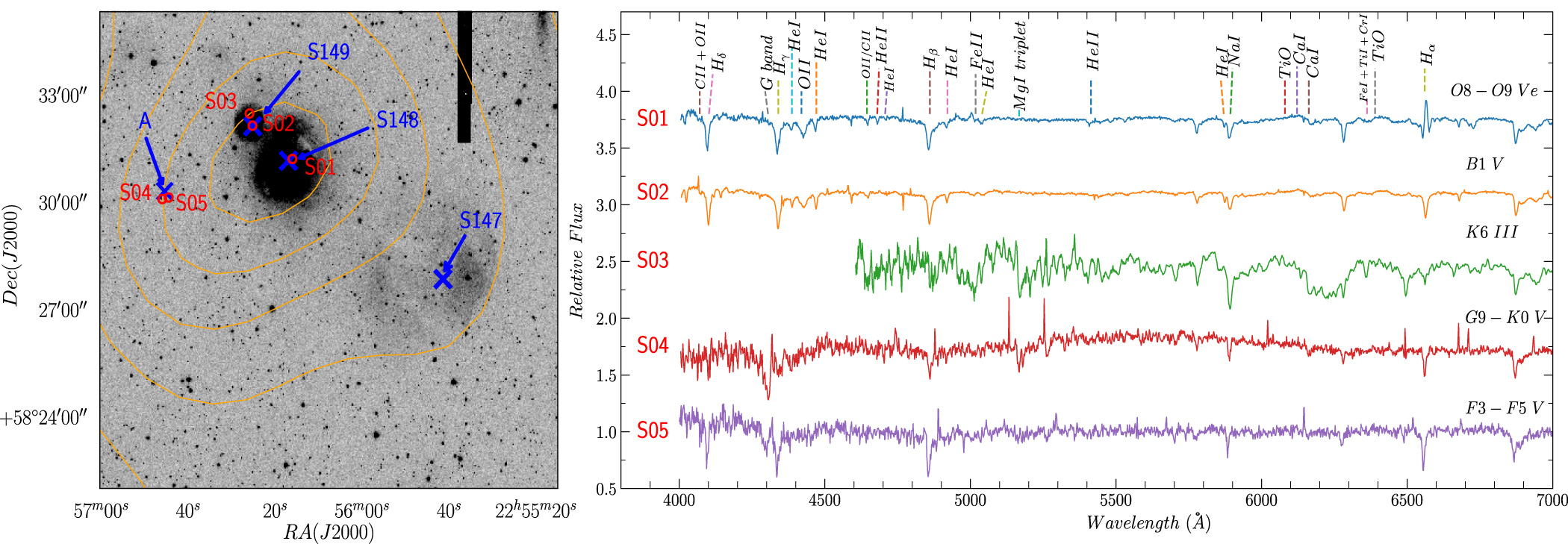
Slide (3) optical spectra of massive stars.
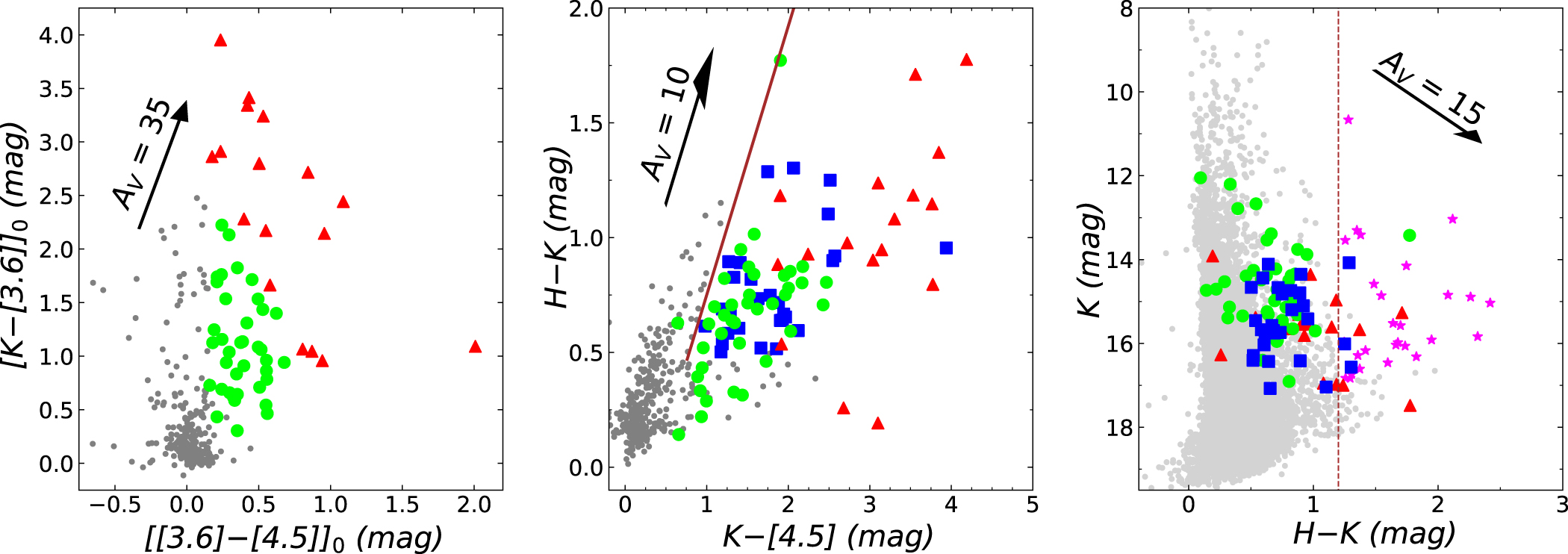
Slide (4) shows the methods of young stellar objects detection.
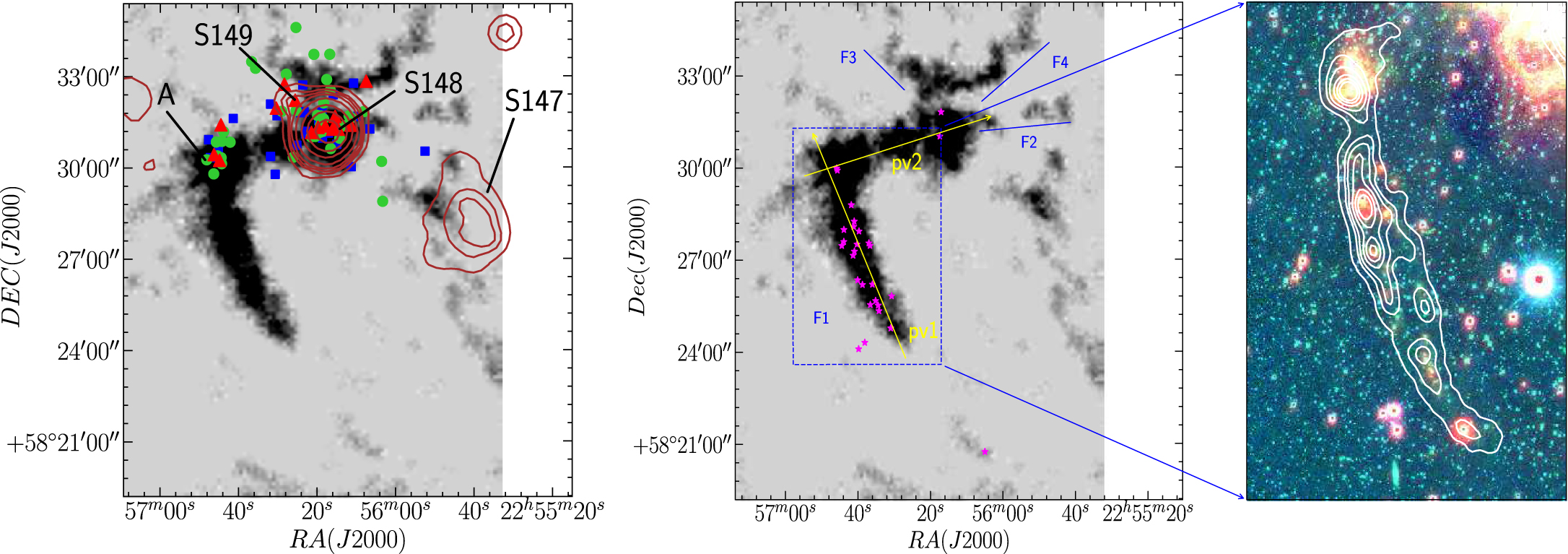
Slide (5) shows the spacial ditribution of young stars and morphology of the filaments associated with the molecular cloud.
|
|
|
Copyright©
Dutta et al. 2015
&
Dutta et al. 2018
|
Project IV: Time-Series photometry of young objects
Photometric variability is a ubiquitous characteristic of young stars.
In a binary system, two components eclipse one another periodically, resulting in a change in the apparent brightness of the system.
Furthermore, various temporal phenomena such as flare-like activity on the corona, circumstellar disc extinction due to disc asymmetry,
variable accretion rates, etc., can lead to aperiodic variability of young stars. Potentially, variability explores the young stars in the field population.
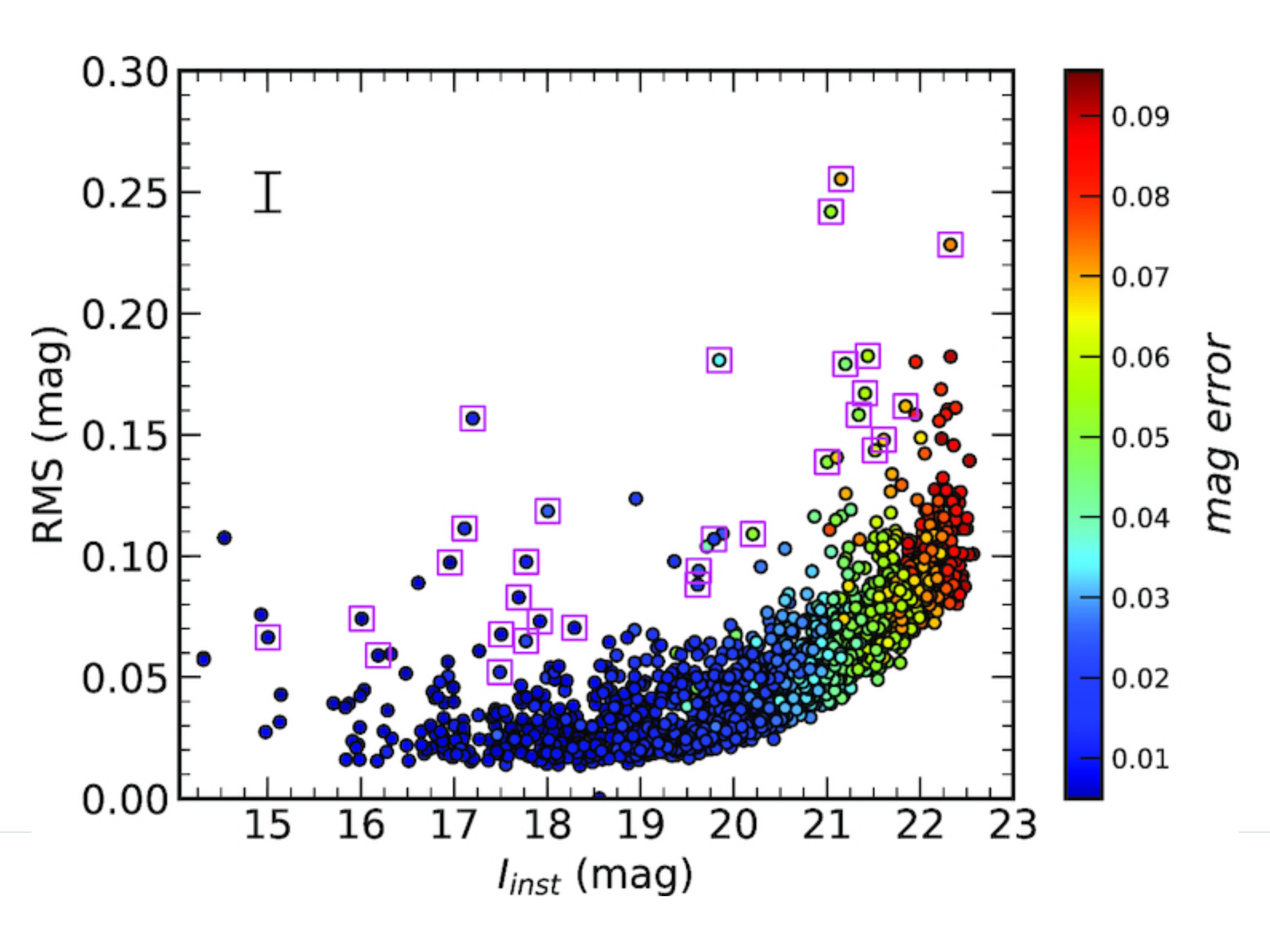
We performed optical monitoring of young star clusters with optical telescopes
2m HCT, India
1.3m DFOT, India;
1.04-m ST, India)
to explore the variability characteristics of the young stars
(ref:
Dutta et al. 2018a
&
Dutta et al. 2019.
|
Optical Photometric Variable Protostars
|
|
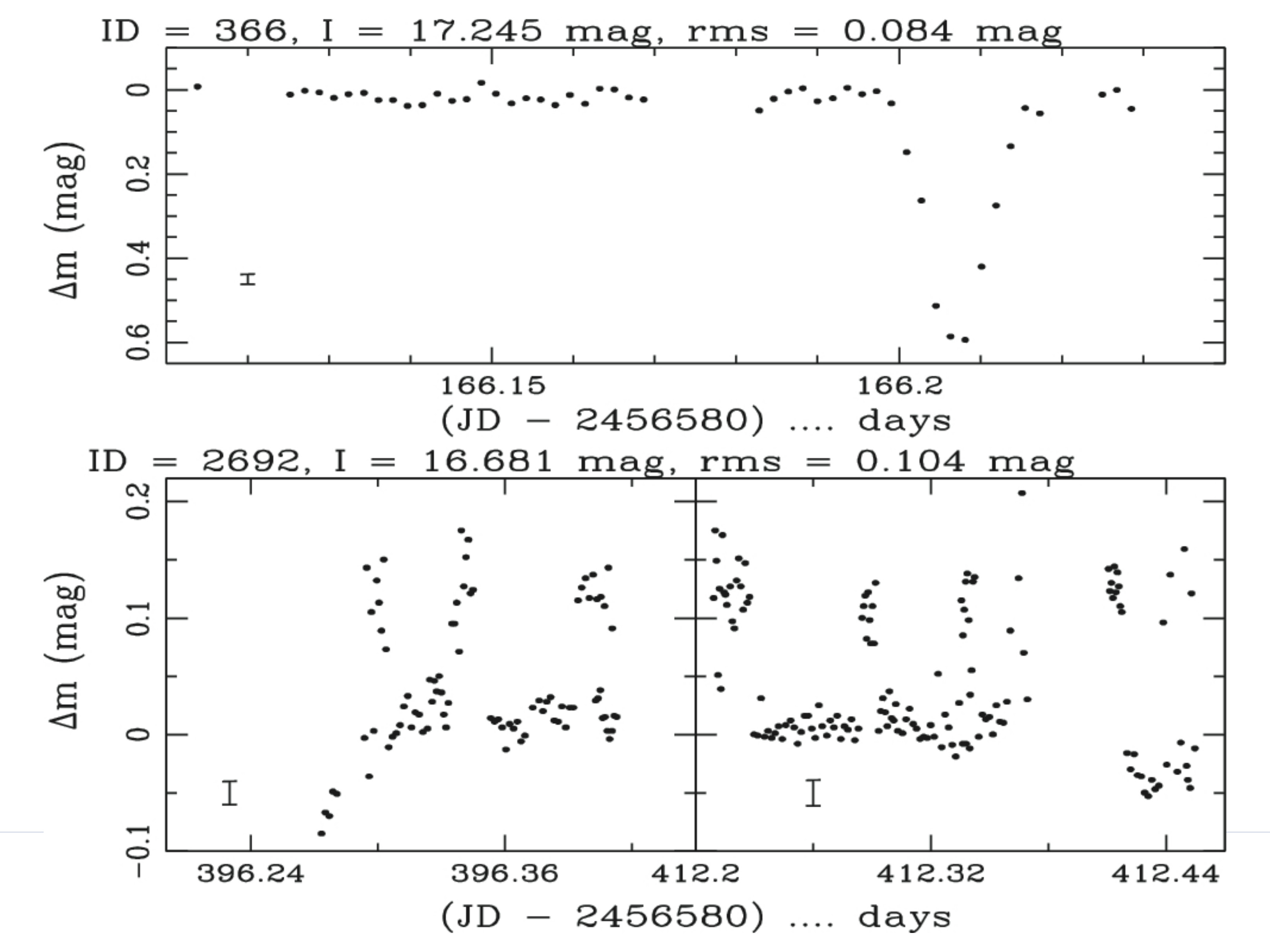
Slide (1) displays our optical observations of star forming cluster NGC 2282.
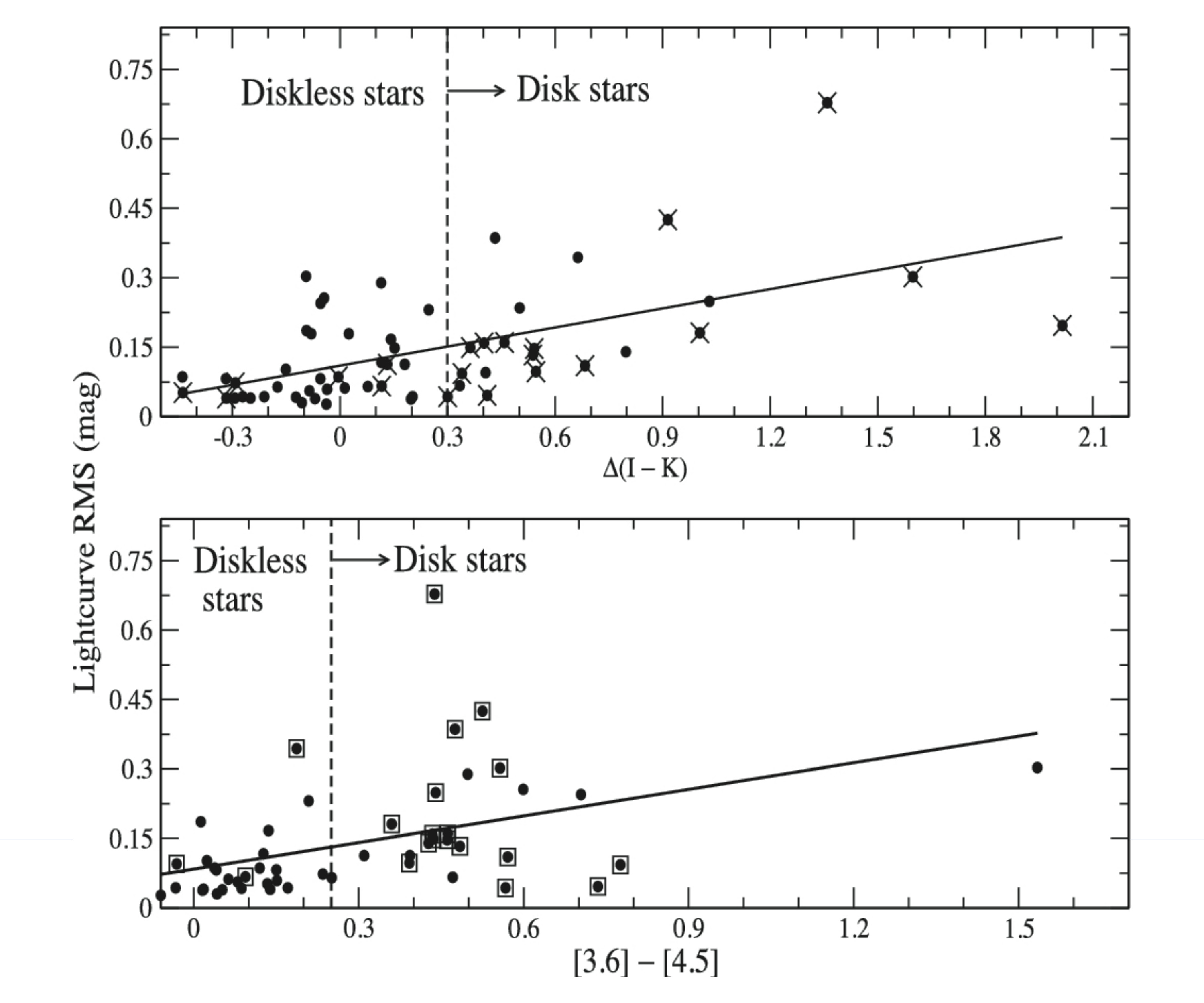
Slide (2) presents RMS deviation of candidate variable stars in NGC 2282 region.
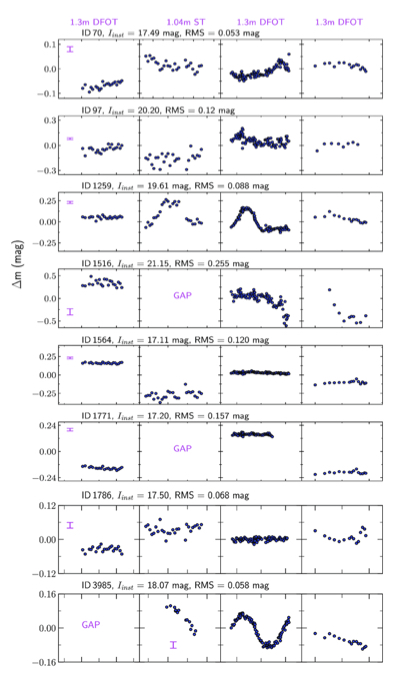
Slide (3) a few example variable ligh curves.
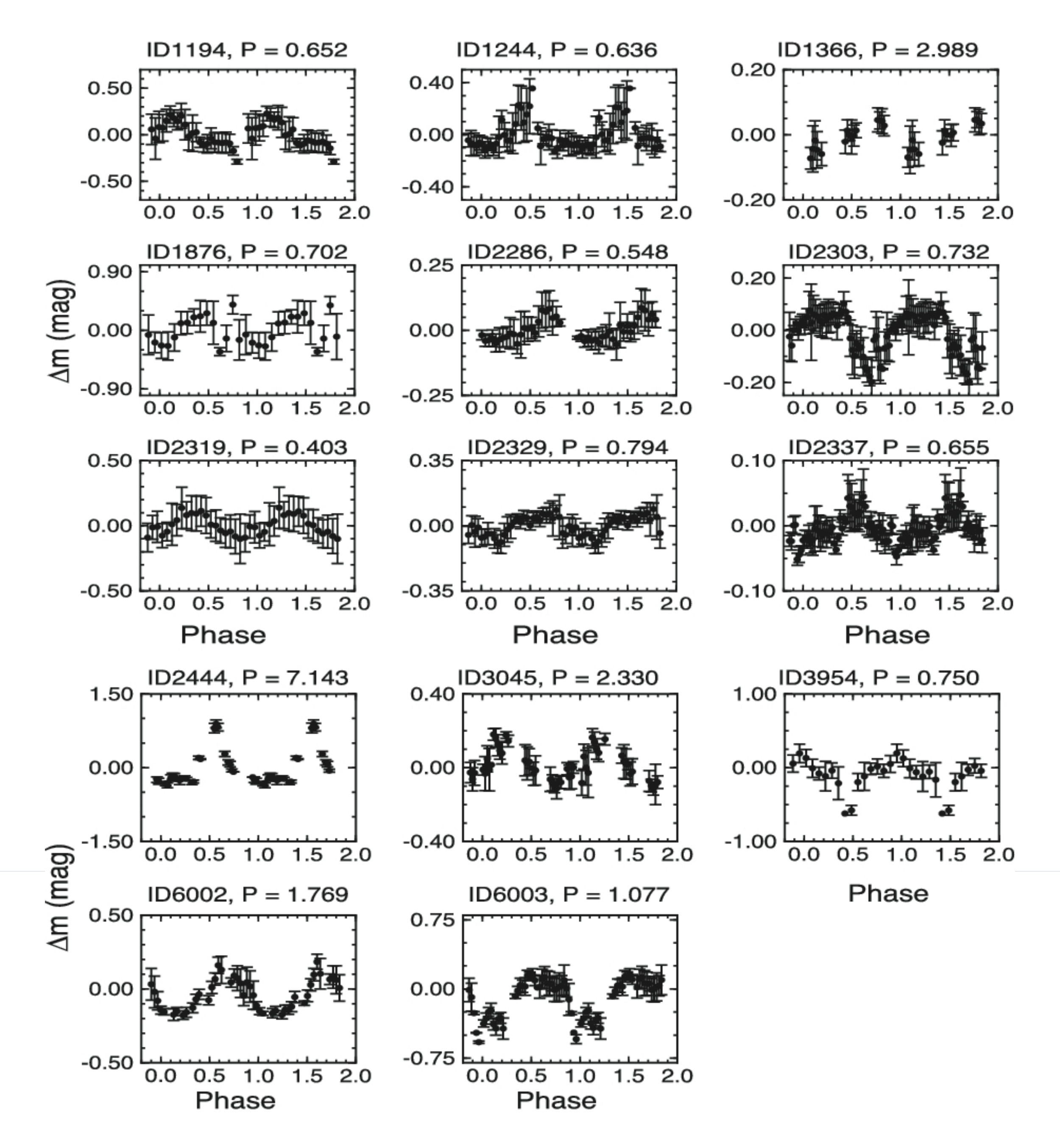
Slide (4) shows some example phase light curves of young stars.
Slide (5) shows a tentative correlation between surrounding material and amplitude of rotation.
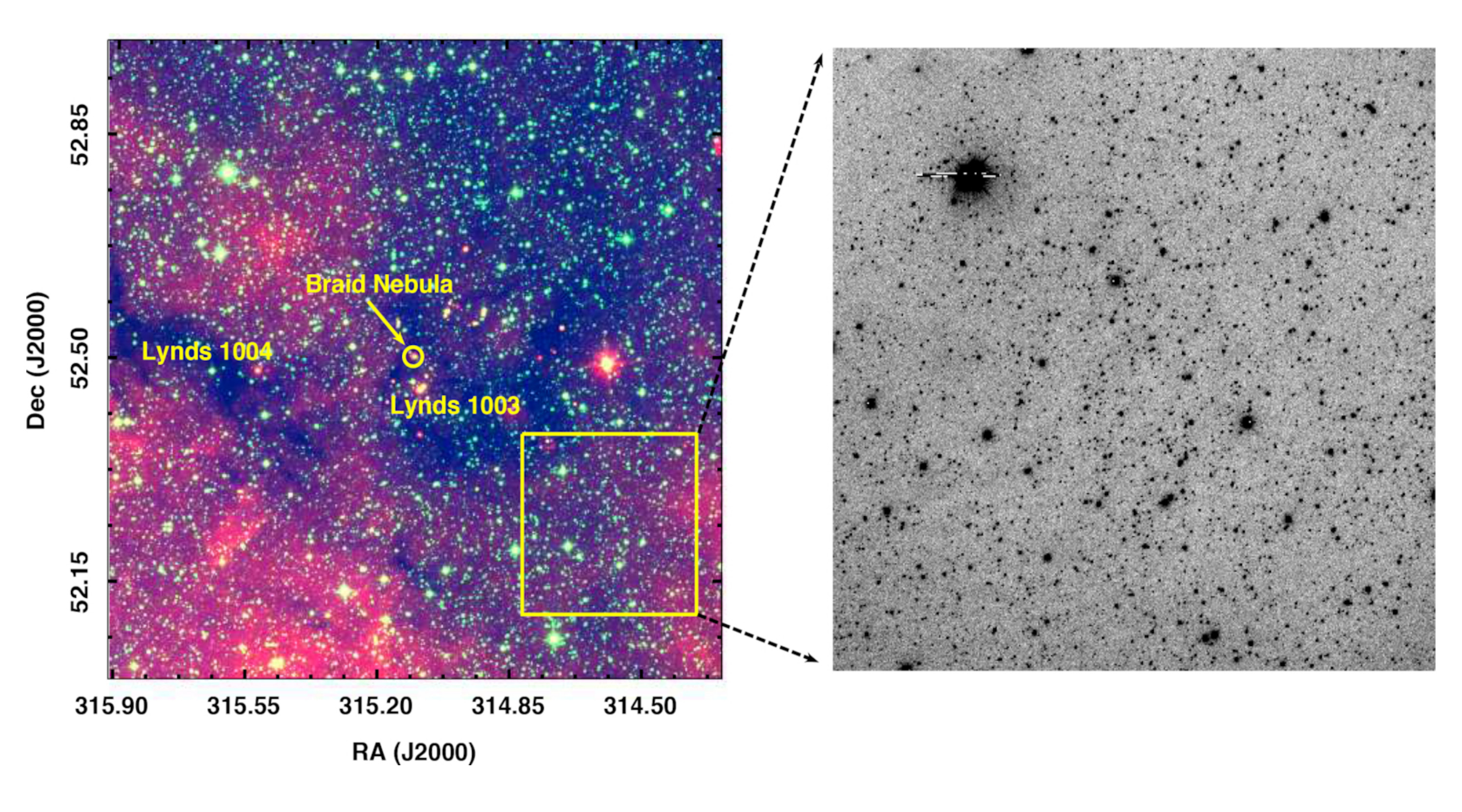
Slide (6) is our observed optical image of Cyg OB7 star forming region.
Slide (7) rms deviation of candidate variable stars in Cyg OB7. Slide
(8) shows observed light curves of the stars.
|
|
|
Copyright©
Dutta et al. 2018a
&
Dutta et al. 2019
|
Publications
Publications
Ongoing: “Unveiling the Shock-Excited Molecular Environment in the Orion Protostars: A infrared spectroscopic survey of protostar”, by Dutta Somnath et al. 2026, Under Review in Journal.
Total 44 refereed papers in International Journals: 12 first authors (3 single author) + 32 Coauthors
First Author Only Publication
-
Dutta S, “A Monopolar Jet from Protostar HOPS 10: Evidence for Asymmetric Magnetized Launching”, 2026, AJ, 171, 211. doi:10.3847/1538-3881/ae4486, Impact Factor: 5.1; Scopus: Q1
-
Dutta S, Lee C-F, Hirano N, Johnstone D, Kim K-T, Kuan Y-J, Di Francesco J, Tatematsu K, Juvela M, Lee CW, Traficante A, Huei-Ru Chen V, Ranjan Samal M, Eden D, Sahu D, Hsu S-Y, Liu T, Liu S-Y, “ALMASOP: Inner-Envelope Structures of Protostars Driving Nascent Jets”, 2026, ApJ, 996, 92. doi:10.3847/1538-4357/ae1d77, Impact Factor: 5.4; Scopus: Q1
-
Dutta S, “Jets in Low-Mass Protostars”, (2025), Univ, 11, pp. 333. (REVIEW ARTICLE), Impact Factor: 2.5; Scopus: Q2
-
Dutta S, “Molecular Jets from an Evolved Protostar: Insights from JWST-ALMA Synergy”, (2025), ApJ, 991, pp. 45. Impact Factor: 5.4; Scopus: Q1
-
Dutta S, Lee C-F, Johnstone D, Lee J-E, Hirano N, Di Francesco J, Moraghan A, Liu T, Sahu D, Liu S-Y, Tatematsu K, Goldsmith PF, Lee CW, Li S, Eden D, Juvela M, Bronfman L, Hsu S-Y, Kim K-T, Kwon W, Sanhueza P, Liu X, López-Vázquez JA, Luo Q, Yi H-W, “ALMA Survey of Orion Planck Galactic Cold Clumps (ALMASOP): Molecular Jets and Episodic Accretion in Protostars”, (2024), AJ, 167, pp. 72. Impact Factor: 5.1; Scopus: Q1
-
Dutta S, Lee C-F, Hirano N, Liu T, Johnstone D, Liu S-Y, Tatematsu K, Goldsmith PF, Sahu D, Evans NJ, Sanhueza P, Kwon W, Qin S-L, Samal MR, Zhang Q, Kim K-T, Shang H, Lee CW, Moraghan A, Jhan K-S, Li S, Lee J-E, Traficante A, Juvela M, Bronfman L, Eden D, Soam A, He J, Liu H-li, Kuan Y-J, Pelkonen V-M, Luo Q, Yi H-W, Hsu S-Y, “ALMA Survey of Orion Planck Galactic Cold Clumps (ALMASOP): Evidence for a Molecular Jet Launched at an Unprecedented Early Phase of Protostellar Evolution”, (2022), ApJ, 931, pp. 130., Impact Factor: 5.4; Scopus: Q1
-
Dutta S, Lee C-F, Johnstone D, Liu T, Hirano N, Liu S-Y, Lee J-E, Shang H, Tatematsu K, Kim K-T, Sahu D, Sanhueza P, di Francesco J, Jhan K-S, Lee CW, Kwon W, Li S, Bronfman L, Liu H-L, Traficante A, Kuan Y-J, Hsu S-Y, Moraghan A, Liu C-F, Eden D, Soam A, Luo Q, (Almasop Team), “ALMA Survey of Orion Planck Galactic Cold Clumps (ALMASOP): Detection of a Dense SiO Jet in the Evolved Protostellar Phase”, (2022), ApJ, 925, pp. 11., Impact Factor: 5.4; Scopus: Q1
-
Dutta S, Lee C-F, Liu T, Hirano N, Liu S-Y, Tatematsu K, Kim K-T, Shang H, Sahu D, Kim G, Moraghan A, Jhan K-S, Hsu S-Y, Evans NJ, Johnstone D, Ward-Thompson D, Kuan Y-J, Lee CW, Lee J-E, Traficante A, Juvela M, Vastel C, Zhang Q, Sanhueza P, Soam A, Kwon W, Bronfman L, Eden D, Goldsmith PF, He J, Wu Y, Pelkonen V-M, Qin S-L, Li S, Li D, “ALMA Survey of Orion Planck Galactic Cold Clumps (ALMASOP). II. Survey Overview: A First Look at 1.3 mm Continuum Maps and Molecular Outflows”, (2020), ApJS, 251, pp. 20., Impact Factor: 8.5; Scopus: Q1
-
Dutta S, Mondal S, Joshi S, Das R, “Optical photometric variable stars towards Cygnus OB7”, (2019), MNRAS, 487, pp. 1765-1776., Impact Factor: 5.2; Scopus: Q1
-
Dutta S, Mondal S, Samal MR, Jose J, “The Planck Cold Clump G108.37-01.06: A Site of Complex Interplay between H II Regions, Young Clusters, and Filaments”, (2018), ApJ, 864, pp. 154., Impact Factor: 5.4; Scopus: Q1
-
Dutta S, Mondal S, Joshi S, Jose J, Das R, Ghosh S, “Optical photometric variable stars towards the Galactic H II region NGC 2282”, (2018), MNRAS, 476, pp. 2813-2824., Impact Factor: 5.2; Scopus: Q1
-
Dutta S, Mondal S, Jose J, Das RK, Samal MR, Ghosh S, “The young cluster NGC 2282: a multiwavelength perspective”, (2015), MNRAS, 454, pp. 3597-3612., Impact Factor: 5.2; Scopus: Q1
Co-Author Publication
-
Tatematsu K., Nishimura A., Ogawa H., Sakai N., Sakai T., Tokuda K., Hasegawa Y., including Dutta S. et al., “Observations of DNC and DCO+ toward the integral-shaped Filament and Starless Cores in the Orion Molecular Clouds”, 2026, ApJS, 284, 21. doi:10.3847/1538-4365/ae5637, Impact Factor: 8.5; Scopus: Q1
-
Hsu S-Y, Lee C-F, Johnstone D, Liu S-Y, Liu T, Bronfman L, Chen H-RV, Dutta S, Eden DJ, Hirano N, Juvela M, Kim K-T, Kuan Y-J, Kwon W, Lee CW, Lee J-E, Li S, Lin S-J, Liu C-F, Liu X, López-Vázquez JA, Luo Q, Rawlings MG, Sahu D, Sanhueza P, Shang H, Tatematsu K, Yang Y-L, “ALMASOP. A Rotating Feature Rich in Complex Organic Molecules in a Protostellar Core”, (2025), ApJ, 989, pp. 56., Impact Factor: 5.4; Scopus: Q1
-
Ghosh S, Mondal S, Dutta S, Kumbhakar R, Das R, Joshi S, Lata S, “Dynamic Photometric Variability in Three Young Brown Dwarfs in Taurus: Detection of Optical Flares with TESS Data”, (2025), ApJ, 981, pp. 75., Impact Factor: 5.4; Scopus: Q1
-
Mookerjea B, Maheswar G, Acharyya K, Baug T, Datta P, Jose J, Ojha DK, Pandian JD, Roy N, Samal M, Sharma S, Soam A, Vig S, Das A, Dewangan L, Dutta S, Eswariah C, Majumdar L, Mallick KK, Mondal S, Ninan JP, Panwar N, Pathak A, Rastogi S, Sahu D, Tej A, Veena VS, “Research on the interstellar medium and star formation in the Galaxy: An Indian perspective”, (2025), JApA, 46, pp. 3. Impact Factor: 1.5; Scopus: Q3
-
Liu C-F, Shang H, Johnstone D, Ai T-H, Lee TM, Krasnopolsky R, Hirano N, Dutta S, Hsu S-Y, López-Vázquez JA, Liu S-Y, Liu T, Tatematsu K, Zhang Q, Rawlings MG, Eden D, Ren Z, Sanhueza P, Kwon W, Lee CW, Kuan Y-J, Bandopadhyay S, Väisälä MS, Lee C-F, Das I, “ALMA Survey of Orion Planck Galactic Cold Clumps (ALMASOP): Nested Morphological and Kinematic Structures of Outflows Revealed in SiO and CO Emission”, (2025), ApJ, 979, pp. 17., Impact Factor: 5.4; Scopus: Q1
-
López-Vázquez JA, Lee C-F, Shang H, Cabrit S, Krasnopolsky R, Codella C, Liu C-F, Podio L, Dutta S, Murphy A, Wiseman J, “Multiple Components of the Outflow in the Protostellar System HH 212: Outer Outflow Shell, Rotating Wind, Shocked Wind, and Jet”, (2024), ApJ, 977, pp. 126. Impact Factor: 5.4; Scopus: Q1
-
Hsu S-Y, Lee C-F, Liu S-Y, Johnstone D, Liu T, Takahashi S, Bronfman L, Chen H-RV, Dutta S, Eden DJ, Evans NJ, Hirano N, Juvela M, Kuan Y-J, Kwon W, Lee CW, Lee J-E, Li S, Liu C-F, Liu X, Luo Q, Qin S-L, Sahu D, Sanhueza P, Shang H, Tatematsu K, Yang Y-L, “ALMASOP. The Localized and Chemically Rich Features near the Bases of the Protostellar Jet in HOPS 87”, (2024), ApJ, 976, pp. 29. Impact Factor: 5.4; Scopus: Q1
-
Liu X, Liu T, Shen Z, Qin S-L, Luo Q, Gong Y, Cheng Y, Henkel C, Gu Q, Zhu F, Zhang T, Zhao R, Wu Y, Li B, Li J, Zhao Z, Wang J, Zhong W, Liu Q, Xia B, Fu L, Yan Z, Zhang C, Wang L, Ye Q, Yang A, Xu F, Zhang C, Dutta S, Li S, Liu M, Yang D, Li C, Chen L, “The First Ka-band (26.1–35 GHz) Blind Line Survey toward Orion KL”, (2024), ApJS, 271, pp. 3. Impact Factor: 8.5; Scopus: Q1
-
Rawat V, Samal MR, Walker DL, Ojha DK, Tej A, Zavagno A, Zhang CP, Elia D, Dutta S, Jose J, Eswaraiah C, Sharma E, “The Giant Molecular Cloud G148.24+00.41: gas properties, kinematics, and cluster formation at the nexus of filamentary flows”, (2024), MNRAS, 528, pp. 2199-2219. Impact Factor: 5.2; Scopus: Q1
-
Rawat V, Samal MR, Eswaraiah C, Wang J-W, Elia D, Panigrahy S, Zavagno A, Yadav RK, Walker DL, Jose J, Ojha DK, Zhang CP, Dutta S, “Understanding the relative importance of magnetic field, gravity, and turbulence in star formation at the hub of the giant molecular cloud G148.24+00.41”, (2024), MNRAS, 528, pp. 1460-1475. Impact Factor: 5.2; Scopus: Q1
-
Hirano N, Sahu D, Liu S-Y, Liu T, Tatematsu K, Dutta S, Li S, Lee C-F, Li PS, Hsu S-Y, Lin S-J, Johnstone D, Bronfman L, Chen H-RV, Eden DJ, Kuan Y-J, Kwon W, Lee CW, Liu H-L, Rawlings MG, Ristorcelli I, Traficante A, “ALMA Survey of Orion Planck Galactic Cold Clumps (ALMASOP): Discovery of an Extremely Dense and Compact Object Embedded in the Prestellar Core G208.68-19.92-N2”, (2024), ApJ, 961, pp. 123. Impact Factor: 5.4; Scopus: Q1
-
Hsu S-Y, Liu S-Y, Johnstone D, Liu T, Bronfman L, Chen H-RV, Dutta S, Eden DJ, Evans NJ, Hirano N, Juvela M, Kuan Y-J, Kwon W, Lee C-F, Lee CW, Lee J-E, Li S, Liu C-F, Liu X, Luo Q, Qin S-L, Rawlings MG, Sahu D, Sanhueza P, Shang H, Tatematsu K, Yang Y-L, “ALMA Survey of Orion Planck Galactic Cold Clumps (ALMASOP): The Warm-envelope Origin of Hot Corinos”, (2023), ApJ, 956, pp. 120. Impact Factor: 5.4; Scopus: Q1
-
Luo Q-yi, Liu T, Lee AT, Offner SSR, di Francesco J, Johnstone D, Juvela M, Goldsmith PF, Qin S-L, Mai X, Liu X-chuan, Sanhueza P, Xu F-W, Tatematsu K, Dutta S, Chen H-RV, Li S, Yang A, Liu S-Y, Lee C-F, Hirano N, Lee CW, Sahu D, Shang H, Hsu S-Y, Bronfman L, Kwon W, Rawlings MG, Eden D, Lu X, Gu Q-lao, Ren Z, Ward-Thompson D, Shen Z-Q, “ALMA Survey of Orion Planck Galactic Cold Clumps (ALMASOP): A Forming Quadruple System with Continuum ‘‘Ribbons’’ and Intricate Outflows”, (2023), ApJL, 952, pp. L2. Impact Factor: 11.1; Scopus: Q1
-
Sahu D, Liu S-Y, Johnstone D, Liu T, Evans NJ, Hirano N, Tatematsu K, Di Francesco J, Lee C-F, Kim K-T, Dutta S, Hsu S-Y, Li S, Luo Q-Y, Sanhueza P, Shang H, Traficante A, Juvela M, Lee CW, Eden DJ, Goldsmith PF, Bronfman L, Kwon W, Lee J-E, Kuan Y-J, Ristorcelli I, “ALMA Survey of Orion Planck Galactic Cold Clumps (ALMASOP): Density Structure of Centrally Concentrated Prestellar Cores from Multiscale Observations”, (2023), ApJ, 945, pp. 156. Impact Factor: 5.4; Scopus: Q1
-
Liu X, Liu T, Shen Z, Qin S-L, Luo Q, Cheng Y, Gu Q, Zhang T, Zhu F-Y, Liu S-Y, Lu X, Zhao R, Zhong W, Wu Y, Li J, Zhao Z, Wang J, Liu Q, Xia B, Li B, Fu L, Yan Z, Zhang C, Wang L, Ye Q, Tatematsu K, Liu H, Shang H, Xu F, Lee C-F, Zhang C, Dutta S, “A Q-band Line Survey toward Orion KL Using the Tianma Radio Telescope”, (2022), ApJS, 263, pp. 13. Impact Factor: 8.5; Scopus: Q1
-
Luo Q-yi, Liu T, Tatematsu K, Liu S-Y, Li PS, di Francesco J, Johnstone D, Goldsmith PF, Dutta S, Hirano N, Lee C-F, Li D, Kim K-T, Won Lee C, Lee J-E, Liu X-chuan, Juvela M, He J, Qin S-L, Liu H-L, Eden D, Kwon W, Sahu D, Li S, Xu F-W, Zhang S-ju, Hsu S-Y, Bronfman L, Sanhueza P, Pelkonen V-M, Zhou J-wen, Liu R, Gu Q-lao, Wu Y-fang, Mai X-feng, Falgarone E, Shen Z-Q, “ALMA Survey of Orion Planck Galactic Cold Clumps (ALMASOP): How Do Dense Core Properties Affect the Multiplicity of Protostars?”, (2022), ApJ, 931, pp. 158. Impact Factor: 5.4; Scopus: Q1
-
Jhan K-S, Lee C-F, Johnstone D, Liu T, Liu S-Y, Hirano N, Tatematsu K, Dutta S, Moraghan A, Shang H, Lee J-E, Li S, Liu C-F, Hsu S-Y, Kwon W, Sahu D, Liu X-C, Kim K-T, Luo Q, Qin S-L, Sanhueza P, Bronfman L, Qizhou Z, Eden D, Traficante A, Lee CW, Almasop Team, “ALMA Survey of Orion Planck Galactic Cold Clumps (ALMASOP): Deriving Inclination Angle and Velocity of the Protostellar Jets from Their SiO Knots”, (2022), ApJL, 931, pp. L5. Impact Factor: 11.1; Scopus: Q1
-
Tatematsu K, Yeh Y-T, Hirano N, Liu S-Y, Liu T, Dutta S, Sahu D, Evans NJ, Juvela M, Yi H-W, Lee J-E, Sanhueza P, Li S, Eden D, Kim G, Lee C-F, Wu Y, Kim K-T, Tóth LV, Choi M, Kang M, Thompson MA, Fuller GA, Li D, Wang K, Sakai T, Kandori R, Hsu S-Y, Chiong C-C, ‘‘Almasop’’ Collaboration, “Nobeyama Survey of Inward Motions toward Cores in Orion Identified by SCUBA-2”, (2022), ApJ, 931, pp. 33. Impact Factor: 5.4; Scopus: Q1
-
Qin S-L, Liu T, Liu X, Goldsmith PF, Li D, Zhang Q, Liu H-L, Wu Y, Bronfman L, Juvela M, Lee CW, Garay G, Zhang Y, He J, Hsu S-Y, Shen Z-Q, Lee J-E, Wang K, Tang N, Tang M, Zhang C, Yue Y, Xue Q, Li S, Peng Y, Dutta S, Ge J, Xu F, Chen L-F, Baug T, Dewangan L, Tej A, “ATOMS: ALMA Three-millimeter Observations of Massive Star-forming regions - VIII. A search for hot cores by using C2H5CN, CH3OCHO, and CH3OH lines”, (2022), MNRAS, 511, pp. 3463-3476. Impact Factor: 5.2; Scopus: Q1
-
Hsu S-Y, Liu S-Y, Liu T, Sahu D, Lee C-F, Tatematsu K, Kim K-T, Hirano N, Yang Y-L, Johnstone D, Liu H, Juvela M, Bronfman L, Chen H-RV, Dutta S, Eden DJ, Jhan K-S, Kuan Y-J, Lee CW, Lee J-E, Li S, Liu C-F, Qin S-L, Sanhueza P, Shang H, Soam A, Traficante A, Zhou J, “ALMA Survey of Orion Planck Galactic Cold Clumps (ALMASOP): A Hot Corino Survey toward Protostellar Cores in the Orion Cloud”, (2022), ApJ, 927, pp. 218. Impact Factor: 5.4; Scopus: Q1
-
Liu H-L, Tej A, Liu T, Issac N, Saha A, Goldsmith PF, Wang J-Z, Zhang Q, Qin S-L, Wang K, Li S, Soam A, Dewangan L, Lee CW, Li P-S, Liu X-C, Zhang Y, Ren Z, Juvela M, Bronfman L, Wu Y-F, Tatematsu K, Chen X, Li D, Stutz A, Zhang S, Toth LV, Luo Q-Y, Xu F-W, Li J, Liu R, Zhou J, Zhang C, Tang M, Zhang C, Baug T, Mannfors E, Chakali E, Dutta S, “ATOMS: ALMA Three-millimeter Observations of Massive Star-forming regions - V. Hierarchical fragmentation and gas dynamics in IRDC G034.43+00.24”, (2022), MNRAS, 510, pp. 5009-5022. Impact Factor: 5.2; Scopus: Q1
-
Yadav RK, Samal MR, Semenko E, Zavagno A, Vaddi S, Prajapati P, Ojha DK, Pandey AK, Ridsdill-Smith M, Jose J, Patra S, Dutta S, Irawati P, Sharma S, Sahu DK, Panwar N, “A Comprehensive Study of the Young Cluster IRAS 05100+3723: Properties, Surrounding Interstellar Matter, and Associated Star Formation”, (2022), ApJ, 926, pp. 16. Impact Factor: 5.4; Scopus: Q1
-
Xu F, Wu Y, Liu T, Liu X, Zhang C, Esimbek J, Qin S-L, Li D, Wang K, Yuan J, Meng F, Zhang T, Eden D, Tatematsu K, Evans NJ, Goldsmith PF, Zhang Q, Henkel C, Yi H-W, Lee J-E, Saajasto M, Kim G, Juvela M, Sahu D, Hsu S-Y, Liu S-Y, Dutta S, Lee C-F, Zhang C-P, Xu Y, Ju B, “Planck Galactic Cold Clumps at High Galactic Latitude-a Study with CO Lines”, (2021), ApJ, 920, pp. 103. Impact Factor: 5.4; Scopus: Q1
-
Tatematsu K, Kim G, Liu T, Evans NJ, Yi H-W, Lee J-E, Wu Y, Hirano N, Liu S-Y, Dutta S, Sahu D, Sanhueza P, Kim K-T, Juvela M, Tóth LV, Fehér O, He J, Ge J, Feng S, Choi M, Kang M, Thompson MA, Fuller GA, Li D, Ristorcelli I, Wang K, di Francesco J, Eden D, Ohashi S, Kandori R, Vastel C, Hirota T, Sakai T, Lu X, Nguyên Lu'O'Ng Q, Shinnaga H, Kim J, Scope Collaboration, Jcmt Large Program, “Molecular Cloud Cores with High Deuterium Fractions: Nobeyama Mapping Survey”, (2021), ApJS, 256, pp. 25. Impact Factor: 8.5; Scopus: Q1
-
Lee Y-H, Johnstone D, Lee J-E, Herczeg G, Mairs S, Contreras-Peña C, Hatchell J, Naylor T, Bell GS, Bourke TL, Broughton C, Francis L, Gupta A, Harsono D, Liu S-Y, Park G, Plovie S, Moriarty-Schieven GH, Scholz A, Sharma T, Teixeira PS, Wang Y-T, Aikawa Y, Bower GC, Vivien Chen H-R, Bae J, Baek G, Chapman S, Ping Chen W, Du F, Dutta S, Forbrich J, Guo Z, Inutsuka S-ichiro, Kang M, Kirk H, Kuan Y-J, Kwon W, Lai S-P, Lalchand B, Lane JMM, Lee C-F, Liu T, Morata O, Pearson S, Pon A, Sahu D, Shang H, Stamatellos D, Tang S-Y, Xu Z, Yoo H, Rawlings JMC, “The JCMT Transient Survey: Four-year Summary of Monitoring the Submillimeter Variability of Protostars”, (2021), ApJ, 920, pp. 119. Impact Factor: 5.4; Scopus: Q1
-
Ghosh S, Mondal S, Das R, Dutta S, “Spectroscopic and Photometric Monitoring of a Poorly Known Highly Luminous OH/IR Star: IRAS 18278+0931”, (2021), AJ, 161, pp. 198. Impact Factor: 5.1; Scopus: Q1
-
Panja A, Chen WP, Dutta S, Sun Y, Gao Y, Mondal S, “Sustaining Star Formation in the Galactic Star Cluster M 36?”, (2021), ApJ, 910, pp. 80. Impact Factor: 5.4; Scopus: Q1
-
Ghosh S, Mondal S, Dutta S, Das R, Joshi S, Lata S, Khata D, Panja A, “Fast photometric variability of very low mass stars in IC 348: detection of superflare in an M dwarf”, (2021), MNRAS, 500, pp. 5106-5116. Impact Factor: 5.2; Scopus: Q1
-
Sahu D, Liu S-Y, Liu T, Evans NJ, Hirano N, Tatematsu K, Lee C-F, Kim K-T, Dutta S, Alina D, Bronfman L, Cunningham M, Eden DJ, Garay G, Goldsmith PF, He J, Hsu S-Y, Jhan K-S, Johnstone D, Juvela M, Kim G, Kuan Y-J, Kwon W, Lee CW, Lee J-E, Li D, Li PS, Li S, Luo Q-Y, Montillaud J, Moraghan A, Pelkonen V-M, Qin S-L, Ristorcelli I, Sanhueza P, Shang H, Shen Z-Q, Soam A, Wu Y, Zhang Q, Zhou J, “ALMA Survey of Orion Planck Galactic Cold Clumps (ALMASOP): Detection of Extremely High-density Compact Structure of Prestellar Cores and Multiple Substructures Within”, (2021), ApJL, 907, pp. L15. Impact Factor: 11.1; Scopus: Q1
-
Hsu S-Y, Liu S-Y, Liu T, Sahu D, Hirano N, Lee C-F, Tatematsu K, Kim G, Juvela M, Sanhueza P, He J, Johnstone D, Qin S-L, Bronfman L, Chen H-RV, Dutta S, Eden DJ, Jhan K-S, Kim K-T, Kuan Y-J, Kwon W, Lee CW, Lee J-E, Moraghan A, Rawlings MG, Shang H, Soam A, Thompson MA, Traficante A, Wu Y, Yang Y-L, Zhang Q, “ALMA Survey of Orion Planck Galactic Cold Clumps (ALMASOP). I. Detection of New Hot Corinos with the ACA”, (2020), ApJ, 898, pp. 107. Impact Factor: 5.4; Scopus: Q1
-
Panja A, Mondal S, Dutta S, Joshi S, Lata S, Das R, “Census of the Young Stellar Population in the Galactic H II Region Sh2-242”, (2020), AJ, 159, pp. 153. Impact Factor: 5.2; Scopus: Q1
-
Ghosh S, Mondal S, Das R, Banerjee DPK, Ashok NM, Hambsch F-J, Dutta S, “Phase-dependent Photometric and Spectroscopic Characterization of the MASTER-Net Optical Transient J212444.87+321738.3: An Oxygen-rich Mira”, (2018), AJ, 155, pp. 216. Impact Factor: 5.2; Scopus: Q1
Conference Proceedings, Abstract, Telegram (Full paper: 3, Abs: 3, Tel: 1)
-
Mondal S, Das R, Ashok NM, Banerjee DPK, Dutta S, Ghosh S, Mondal A, “Near Infrared photometric and spectroscopic observations of the bright optical transient J212444.87+321738.3”, (2013), ATel, 4931, pp. 1.
-
Dutta S, Mondal S, Jose J, Das RK, “Stellar Population and Star Formation History of the Distant Galactic H II Regions NGC 2282 and Sh2-149”, (2017), ASPC, 510, pp. 85.
-
Panja A, Mondal S, Dutta S, Joshi S, Lata S, Das R, Biswas S, “Characterization of pre-main sequence population in HII region Sh2-242”, (2019), BSRSL, 88, pp. 270-274., Impact Factor: 0.39; Scopus: Q3
-
Dutta S, Mondal S, Joshi S, Das R, “Rotation rates of pre-main sequence stars: role of circumstellar disk”, (2019), BSRSL, 88, pp. 103-109. Impact Factor: 0.39; Scopus: Q3
-
Hsu S-Y, Sahu D, Dutta S, Lee C-F, Liu S-Y, Hirano N, Liu T, Jhan K-S, “ALMA Observations of Plank Galactic Cold Clumps in the Orion Cloud Complex: I. Detection of New Hot Corinos”, (2021), cosp, 43, pp. 1994.
-
Dutta S, Lee C-F, “Molecular Jet Launched at an Unprecedented Early Phase of Protostellar Evolution”, (2022), AAS, 240, pp. 237.03.
-
Dutta S, “Jets from Low-Mass Young Stars”, (2024), asi..conf, 42, pp. O52.
Photo Gallery

-->